Commercial · Richmond Hill
Commercial-Grade Lock Replacement in Richmond Hill
A new tenant moved into the unit next door, and the property manager just found three different cylinders on three doors, none of them cut to the same key.
Commercial-Grade Lock Replacement
In plain words
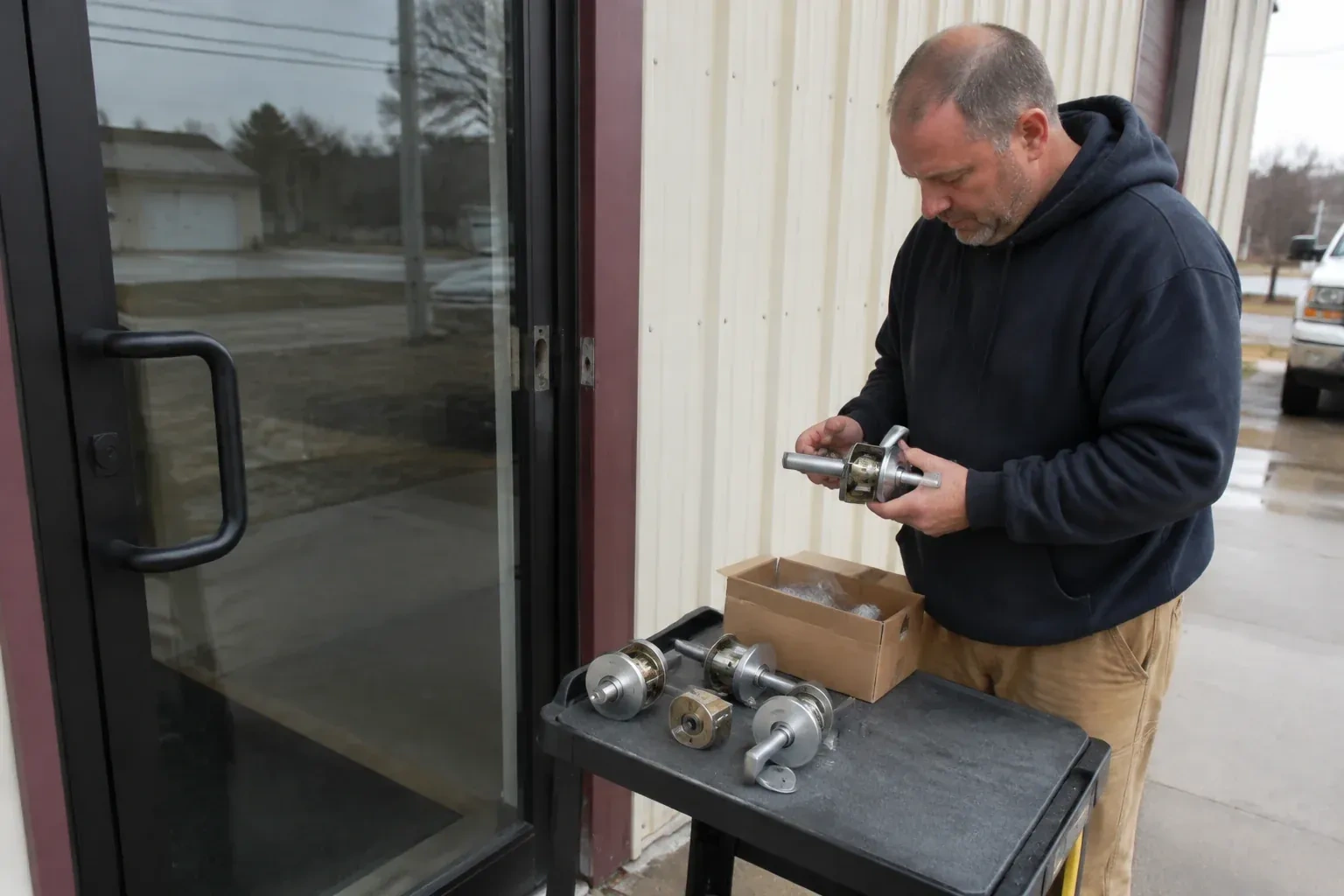
Commercial-grade lock replacement swaps hardware that is worn, damaged, mismatched or simply not rated for a business door with hardware built for that duty: a mortise lock body, a heavy cylindrical lockset, or a narrow-stile lock or hookbolt for an aluminum storefront door. The locksmith reads the door's construction, the traffic the opening takes, and any key or access-control system already running before choosing a replacement. New hardware is keyed into that existing system rather than left to stand on its own, so one business ends up with one coherent set of locks instead of a patchwork of whatever was fitted door by door over the years.
How the visit goesThe key to the office entrance turns with almost no resistance now, and some mornings the deadbolt does not fully retract until someone jiggles the handle and tries the key again.
Richmond Hill
How the visit goes
Checking how the current lock fits the business's key system
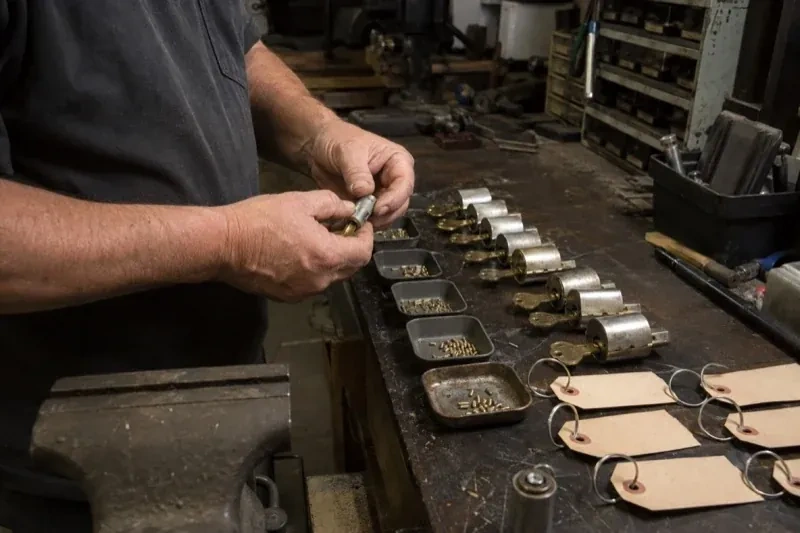
Every commercial building runs some kind of keying logic, even an informal one, and the locksmith maps it before touching hardware: is this cylinder on the same key as other doors, does it belong to a master or grand-master system, is it a standard keyway or a restricted one that only a specific supplier can cut? Getting this picture first means the new hardware can be ordered to slot into that structure, onto a fresh structure the business wants instead, or left standing alone if that is genuinely what is wanted.
Connecting any electrified or access-control hardware
Where the opening already carries an electric strike, a maglock, a door position switch or a card-reader tie-in, that wiring is reconnected to the new mechanical hardware and tested together rather than assumed to still line up. Voltage, fail-safe or fail-secure operation, and monitoring contacts are confirmed against what the access-control or alarm system expects, since electrified hardware that is almost, but not quite, matched to the mechanical lock is a common source of a door that buzzes open but still needs force.
Ready for the next security decision
With current hardware and an accurate key-control record in place, the business is better positioned for whatever comes next: adding a location to the master key system, upgrading a single door to an interchangeable core so staff can rekey it without a service call, or answering an insurer's or landlord's question about what security is on a given door. None of that requires starting from scratch, because the replacement visit leaves behind hardware and documentation that a future decision can build on directly.
Commercial-Grade Lock Replacement
In the van
- Key-control log and tags
- Mortise prep and installation tools
- Narrow-stile storefront lock
- Restricted keyway cylinder
- Interchangeable-core cylinder
What affects the quote
Same fees day, night or weekend
1Coordination with other trades or systems
Where a door closer, an alarm panel or a building-wide access-control platform is involved, coordinating the lock replacement with whoever manages those systems can add planning time that the quote reflects.
2Key-control documentation
Setting up or updating a written key-control log, recording who holds which key and which doors share a system, is a small but distinct task the quote can name separately from the physical hardware work.
3Electrified hardware and access-control integration
An electric strike, maglock or reader tie-in adds parts and testing time beyond a purely mechanical lock, and the quote separates that electrified work from the mechanical hardware so each is clear on its own.
Commercial-Grade Lock Replacement: questions
What makes a lock 'commercial-grade' rather than a residential one?
Commercial-grade hardware is built for far higher cycle counts and rougher daily handling than a home lock ever sees: heavier internal components, a lock body and strike designed to take repeated forceful use, and often a rating tied to an industry grading system that measures cycles and impact resistance. A residential deadbolt fitted to a busy business door tends to wear out well before its time because it was never built for that volume of use.
Do you replace hardware after an attempted break-in even if the door still locks?
Yes, and it is worth having it checked even when the door still appears to function. A cylinder that was drilled at, pried or struck can be weakened internally without showing it externally, and a bent strike or a cracked frame around the lock can let a door appear locked while offering far less resistance than it should.
Will replacing the lock affect my alarm or access-control system?
It can, if the door already carries a door position switch, an electric strike or a card reader, so the locksmith checks for that wiring before starting and reconnects and tests it alongside the new mechanical hardware. The goal is a door where the mechanical lock and the electronic system agree with each other rather than one working around the other.
Commercial Locks
Commercial-Grade Lock Replacement near you
The pages that follow describe the lock services offered in Richmond Hill one by one, without sales talk. Where a service has a simpler or less involved cousin, the page says so. Where a repair will do instead of a replacement, the page says that too. The aim is for you to choose well, not to choose more.