Change or rekey · Richmond Hill
Lock Replacement & Upgrade
The century home's original mortise lock takes a key the size of a spoon, sticks in humid weather and has worn its strike to a groove. You want a lock that works every day without giving up the old door.
Lock Replacement & Upgrade
In plain words
Not every complaint about a lock ends in a new lock, and a good visit says so. A cylinder that turns stiffly may only need cleaning and fresh pins; a lost key calls for rekeying, which keeps the hardware and changes the key; a loose lever often wants a tightened spindle. Replacement earns its place when the mechanism is worn through, the housing is damaged, the grade was never adequate for the entrance, or you want a different function, finish or a keypad. The locksmith lays the three routes side by side so the choice rests on what the door needs rather than on what is in the van.
How the visit goesThe brass handleset has gone blotchy and green where the winter salt reaches it, and the coating on the deadbolt is lifting in flakes. It still locks, but it looks tired beside the fresh paint on the door.
Richmond Hill
How the visit goes
Measuring the existing preparation
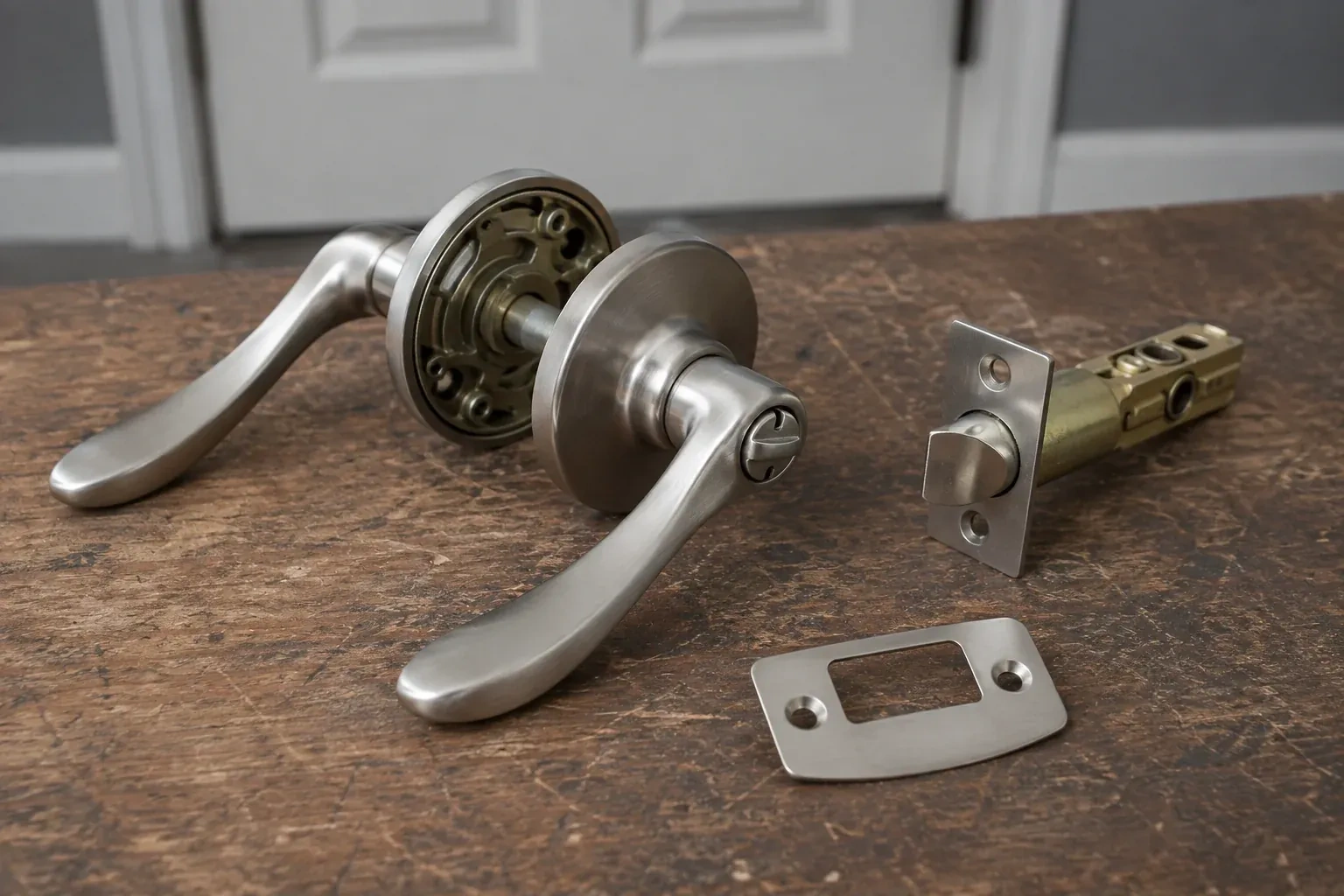
Before any product is chosen the door is measured. Backset first, the distance from the door edge to the centre of the bore, which on most doors here is 60 or 70 millimetres. Then the cross-bore diameter, the edge-bore size, the shape of the latch faceplate, the door thickness and the handing. The strike cut-out and any glass, trim or storm door that limits where hardware can sit are noted too. These few numbers decide which locks will drop straight into the door and which would need a filler plate, an extension kit or fresh drilling, so they are written down before the catalogue is opened.
Taking the old hardware off without harm
Removal is done with the same care as fitting. Interior trim screws come out first, then the interior rose or thumb-turn, and the exterior housing lifts away with its tailpiece. The latch or bolt slides out of the edge bore once its two faceplate screws are released, and the old strike comes off the jamb. Painted-over screws are scored free rather than forced, seized screws are eased with a hand driver of the right size, and a stripped head is drilled out only as a last step. The bore and edge mortise are then cleaned of paint build-up and debris so the new parts seat properly.
Simple habits that keep new hardware new
New locks ask very little. Once or twice a year, or at whatever interval the lock maker specifies, a puff of the lubricant that maker calls for in the keyway and a few turns of the key keep the pins moving freely, since the wrong product for that cylinder gathers grit instead of helping it. In winter, wipe salt spray off the exterior hardware when it appears, since salt is the finish's main enemy here. Each spring and fall, check that the hinge and strike screws are snug, because wood doors move with humidity and a dropped door makes a good lock feel worn. A key that starts to need coaxing is an early word from the cylinder.
Lock Replacement & Upgrade
In the van
- Reinforced strike plate and strike box
- Knob or lever entry set
- Adjustable latch or bolt
- Graded deadbolt
- Handleset with matching deadbolt
What affects the quote
Same fees day, night or weekend
1Keying alike and rekeying
Pinning new cylinders to one key and repinning existing locks to match is work per cylinder, so a whole house on a single key is quoted by the number of locks joining it.
2Type of lock
A knob set, a lever, a deadbolt, a full handleset with deadbolt above, a patio door lock and a keypad or smart deadbolt each carry a different hardware cost and take different time to fit.
3Older and mortise hardware
Servicing an original mortise case, sourcing a compatible cylinder or fitting a conversion plate on a century door involves more assessment and fitting time than a standard cylindrical replacement.
Lock Replacement & Upgrade: questions
Is there anything different about steel or fibreglass doors?
The lock hardware is the same; the door construction changes the method. Steel and fibreglass doors have a wooden or composite block inside the lock stile, and existing bores are used wherever possible. Where a new deadbolt must be added, the locksmith drills with a jig and bits suited to the skin so the hole is clean and square, and fits an edge plate designed for that door. Insulated doors also move less with humidity, so alignment tends to hold well.
Should I rekey my locks or replace them?
Rekey when the hardware is sound and the problem is the key: a lost copy, a move, or too many keys for one house. Replace when the mechanism itself is worn, the housing or bolt is damaged, the grade was never suitable for the entrance, or you want a different function, finish or a keypad. Many visits do both, keeping good locks and rekeying them while replacing the tired ones, all to one key.
Is it possible to upgrade just the exterior locks now and handle interior doors later?
Yes, and it is a common way to spread the work out. Exterior doors carry the security load, so starting there with a graded deadbolt and a reinforced strike covers the part that matters most first. Interior locks, passage sets, privacy locks on bathrooms and bedrooms, can be scheduled for a later visit without affecting anything already done, and the locksmith can note what was fitted so the second visit matches it.
Change or Rekey Locks
- Deadbolt InstallationYou bought a keypad deadbolt online and pulled the old one off, only to find the hole in the door…
- Vintage Mortise Lock ServiceThe interior bedroom doors on the second floor have the original mortise latches, and none of them…
- Smart Lock InstallationHalf the evenings someone asks whether the back door got locked, and nobody is sure.
Lock Replacement & Upgrade near you
The pages that follow describe the lock services offered in Richmond Hill one by one, without sales talk. Where a service has a simpler or less involved cousin, the page says so. Where a repair will do instead of a replacement, the page says that too. The aim is for you to choose well, not to choose more.