High security · Richmond Hill
Safe Installation & Servicing
Behind the filing cabinets sits a heavy floor safe nobody ever bolted down, left exactly as the last owner set it. It opens fine, but a determined pair of hands could simply tip it into a van.
Safe Installation & Servicing
In plain words
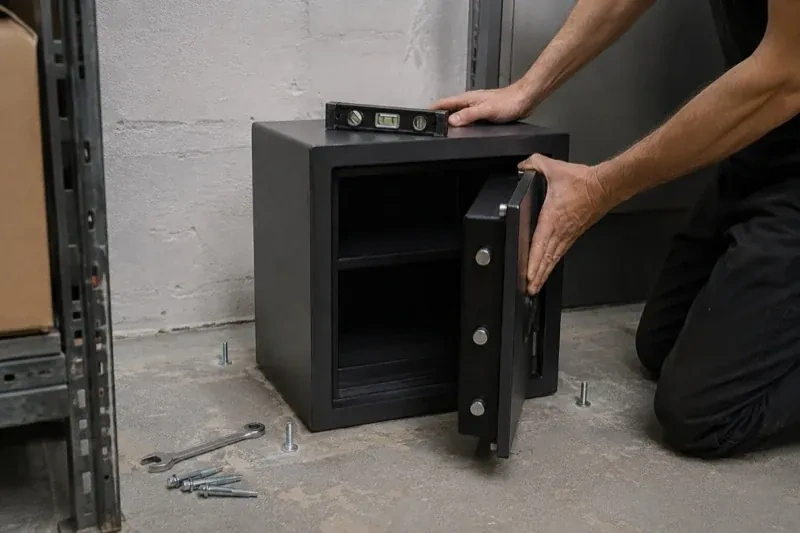
A safe that is not bolted down is not really a safe, just a heavy box that a thief can carry to somewhere quieter to open. Anchoring is the part of installation that turns a portable object into a fixed one: the floor or wall construction is identified first, correct anchor bolts and hardware are chosen for concrete or a wood subfloor, and the unit is leveled and torqued into place. The same principle applies to an existing safe discovered sitting loose in a corner; it can usually be anchored properly without moving it far.
How the visit goesThe accountant's office keeps a decade of client files in cardboard boxes because the only safe in the building is a small drawer safe meant for a laptop, nowhere near large enough for binders of paper.
Richmond Hill
How the visit goes
Getting a heavy unit to its final spot
A commercial safe can weigh several hundred pounds before anything is inside it, so the route from the door to the final position matters as much as the safe itself. The locksmith measures doorways, hallway turns, stairs, and any tight corner along the path, and checks whether an elevator, loading dock, or ramp is involved. A safe that cannot clear a doorway in one piece, or a floor that struggles to bear that weight partway up a building, changes the plan before delivery day rather than becoming a problem on site.
Matching the safe to the two ratings
The visit begins by separating two decisions that people often blur together. Some burglary ratings come from an independent lab timing how long a trained attempt with real tools takes to force the door, expressed in minutes of net working time; others are construction classifications based on steel thickness and body design rather than a timed attack. A fire rating comes from a timed furnace test that measures how hot the interior gets, expressed as a temperature ceiling held for a set number of hours. A unit is chosen, or confirmed if it is already owned, against both numbers separately rather than a single vague idea of how secure a safe looks.
A combination or code that belongs only to the household or business
The final combination or code is set by the owner alone, after the locksmith has finished testing, so nobody who did the installation carries it away in their head. Writing it down somewhere other than beside the safe, or storing it with a trusted person away from the property, is worth doing once rather than relying on memory during a stressful moment. Where the lock supports more than one code, deciding now who else should have one avoids an awkward conversation later.
Safe Installation & Servicing
In the van
- Mechanical or electronic lock
- Rated safe (burglary and fire)
- Hammer drill and masonry bits
- Level and floor shims
- Torque wrench and socket set
What affects the quote
Same fees day, night or weekend
1Floor or wall construction
Solid concrete, a wood subfloor reaching into joists, and tile each call for a different anchoring approach and different hardware, and the substrate is confirmed before any drilling begins.
2Burglary rating chosen
A higher burglary rating generally means a heavier, more solidly constructed body, which affects both the unit itself and the equipment needed to move and anchor it.
3Condition of an existing safe
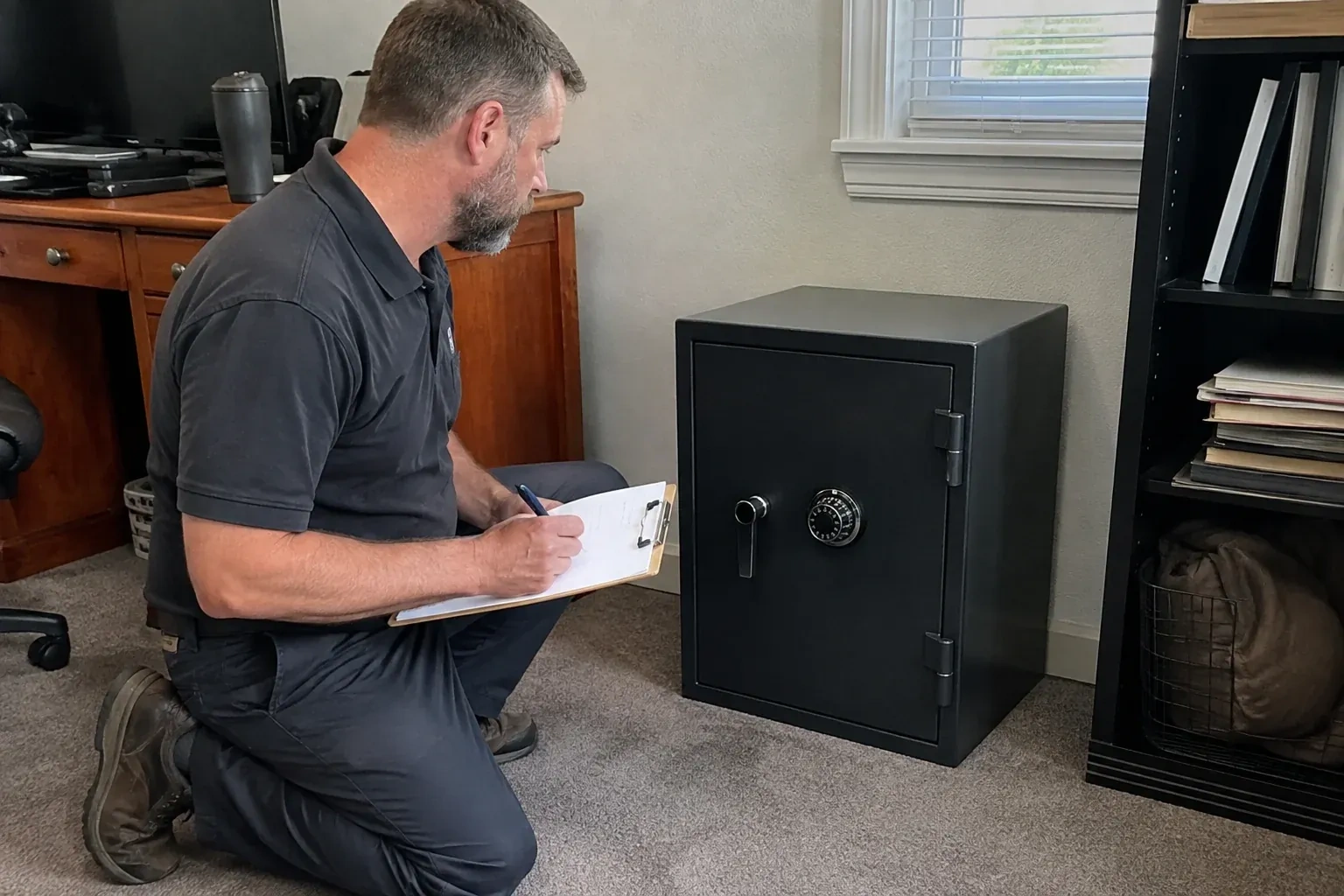
Rust on hinges, stiff or grinding bolt-work, a lock that hesitates, or anchoring that was never done all add work beyond a routine check on a servicing visit.
Safe Installation & Servicing: questions
How much weight does a filled safe put on the floor?
It depends entirely on the unit's size and construction, since the steel body itself usually weighs far more than whatever ends up inside it. A small document safe and a large commercial unit sit at very different points on that scale. Confirming the safe's own weight before delivery, and checking it against the floor it will sit on, is part of the assessment rather than something guessed at on arrival.
How often does the battery need replacing on an electronic lock?
Most electronic locks give a low-battery warning, usually a beep or flashing light, well before they actually stop working, and replacing the battery within that same week is the safer habit rather than waiting. Depending on how often the safe is opened, a battery commonly lasts somewhere between one and several years, and keeping a spare of the correct type near the safe avoids a search once the warning starts.
Will you service a safe that another company installed?
Yes, servicing does not depend on who did the original installation. The locksmith opens the bolt-work, tests the lock through a full cycle, checks the anchoring underneath, and replaces batteries in an electronic lock as needed, regardless of the brand or who fitted it originally. Not knowing the history of the unit just means a slightly more thorough first look before any work begins.
High Security Locks
Safe Installation & Servicing near you
The pages that follow describe the lock services offered in Richmond Hill one by one, without sales talk. Where a service has a simpler or less involved cousin, the page says so. Where a repair will do instead of a replacement, the page says that too. The aim is for you to choose well, not to choose more.